
When was the last time you couldn’t wait to tell a friend about your favorite brand? I’m not talking about a simple “it’s good,” but a real, “Oh my gosh, you have to try this!” kind of moment.
Now, ask yourself: did that happen after your very first order? Or was it after you’d been a customer for a while?

That excitement doesn’t just appear out of nowhere. It’s a sign that a company has successfully turned you from a first-time buyer into a true fan.
If your businesses spend only immense energy and budget on that initial click, that first sale. Then you’re missing the real growth, and the powerful word-of-mouth marketing all comes from what happens after the “Buy Now” button.
The good news? This isn’t a mystery. Brand loyalty isn’t a light switch that flips on; it’s a staircase that takes you up to develop a strong fan base, not just regular customers.
By understanding its three distinct stages, you can stop guessing and start strategically building your customer community.
So I will describe the three stages of brand loyalty. and give you the practical tools you need to get your customers to climb all the way to the top.
Describe the three stages of brand loyalty.
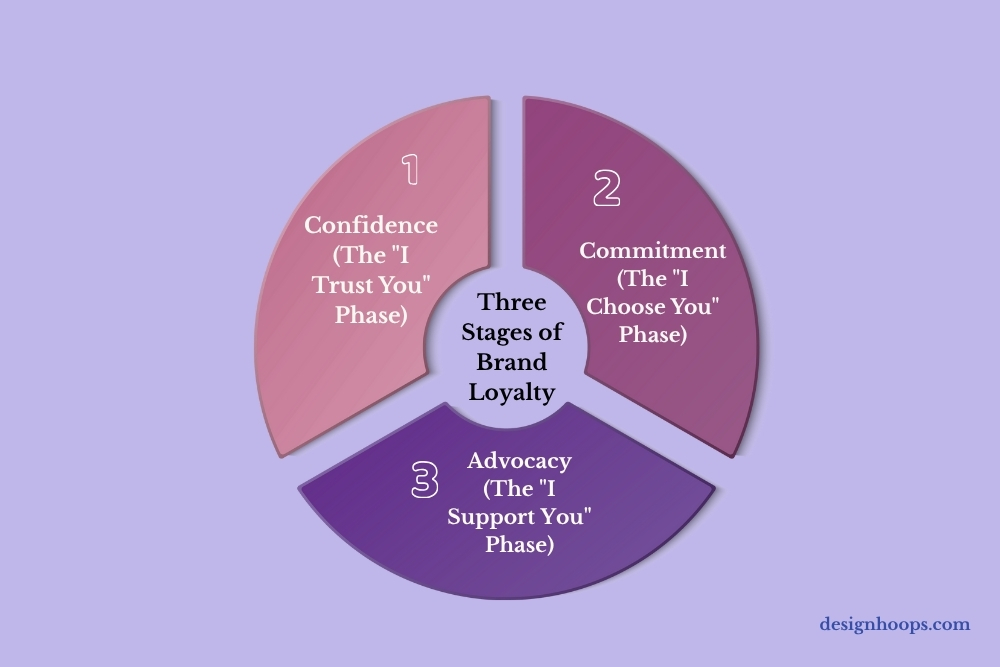
Stage 1: Confidence (The “I Trust You” Phase)
This is where every great brand relationship begins. Take it as the first date. The customer has moved from being a complete stranger to someone who is willing to give you a chance. They believe your product might solve their problem, and they’re investing their money to find out.
The connection here is still purely transactional. It’s built on one simple thing: you delivering exactly what you promised.
What does this stage look like in real life?
- A customer makes their first, or maybe second, purchase.
- In their head, they’re running a simple test:“Does this thing actually work?” “Was it easy to get?” “If I have a problem, will they help me?”
- The relationship is brand new and fragile. One major misstep—a broken product, a terrible service experience—and they’re gone for good.
How do you win that initial trust?
You don’t win a fan here; you simply earn the right to a second date. Here’s how you do it:
- Create a Flawless First Experience: From unboxing to using the product for the first time, make it smooth, natural, and even a little delightful. No confusion, no frustration. Because if you don’t, then 73 percent of consumers switch to a competitor after a few bad experiences.
- Under-Promise and Over-Deliver: If you promise 3-day shipping, aim to get it there in 2. This small surprise creates a powerful “they’re great!” impression.
- Be Helpful and Human: If they contact customer service, be responsive, kind, and actually solve their problem. Show them you are real, caring people behind the logo.
- Most importantly, have a Great Product or Service: All of this is pointless if the core thing you’re selling doesn’t work as expected. Quality is non-negotiable.
Get this stage right, and you’ve laid a rock-solid foundation. At the same time, the customer doesn’t just have a product; they have a reason to come back.
Stage 2: Commitment (The “I Choose You” Phase)
At this point, you’ve passed the test and built confidence while earning a customer’s trust. Now, something powerful shifts. This isn’t just a fling anymore; it’s the start of a real relationship.
While the customer doesn’t just like you, they actively prefer you. When faced with a need you can fill, your brand is the first, and often only one that comes to mind.
You’ve become their go-to solution, comfortable purchase, and trusted partner. This isn’t passive loyalty out of convenience; it’s an active choice, and it’s where true brand love begins to blossom.
What Commitment Looks Like:
- Repeat, Predictable Purchases: They’re not just a name in your database; they’re a part of your revenue beat. Similar to a customer who always buys a brand coffee or automatically renews their software subscription.
- They’ve Let You Into Their Inbox & Feed: They’ve willingly signed up for your newsletter and followed you on social media. You’ve earned a spot in their daily life beyond the checkout page.
- A Positive Emotional Connection: This is the core of it. Buying from you doesn’t just solve a problem—it feels good. It feels right, smart, and aligned with who they are or who they want to be.
How You Can Deepen the Emotional Connection.
Your goal in Stage 2 is to move the relationship from the logical (“This product works”) to the emotional (“I love this brand”). Here’s how you do it:
1. Personalized Communication: Make It Feel One-on-One.
Use their name, recommend products based on their unique purchase history, and send content that speaks to their specific interests.
2. Launch a Loyalty Program: Reward the Choice.
Show them that you value their repeat purchases. In the meantime, introducing a points system, early access to sales, or exclusive discounts for members makes them feel like an insider. It’s a tangible “thank you” that reinforces their smart decision to stick with you.
3. Create a Community: Make Them Part of the Tribe.
Additionally, invite them into a private Facebook Group, a members-only forum, or an exclusive event. When customers connect with each other over a shared love for your brand, their commitment skyrockets. They’re no longer just customers; they’re part of a community with a common identity.
4. Share Your Brand Story: Connect Through Values.
Why does your company exist beyond making a profit? Share your mission, your values, and the people behind the logo. Do you prioritise sustainability? Ethical manufacturing? Radical innovation? When a customer identifies with your why, their commitment transforms from being about a product to being about a shared belief.
Apart from that, emotional branding also helps to build a meaningful connection with shared values.
Stage 3: Advocacy (The “I Support You” Phase)
Now describe the last one of the three stages of brand loyalty. You’ve built confidence and forged commitment. Now, you arrive at the third stage of brand loyalty: Advocacy. Your customer has moved their role from a mere buyer and has become something far more powerful: a voluntary, passionate member of your marketing team.
Your wins are their wins. And now, your brand has become connected with their identity, and they support you not for a reward, but because they genuinely believe in what you do. This is the ultimate competitive advantage.
What Advocacy Looks Like in Action:
- They Are Your Speakers: They refer friends and family without being asked. They’re the ones saying, “You have to try this!” in conversations.
- They Are Your Defender: They’ll jump into the comments section or a review site to defend your brand against criticism. They feel compelled to protect the reputation of a brand they love.
- They Are Your Co-creators: They provide thoughtful, constructive feedback, not to complain, but because they are invested in your journey and want you to improve and succeed.
- They Wear Your Badge with Pride: They rock your merch, display your sticker, and are walking, talking ambassadors in their daily lives.
How Can You Celebrate Your Loyal Consumers?

Your goal here is to fuel, recognize, and reward the advocacy that already exists. Make them feel seen, heard, and valued.
1. Create a Referral Program: Formalize the Word-of-Mouth.
Make it effortless for them to share the love. A simple, rewarding referral program gives them a structured way to do what they’re already inclined to do. It’s your way of saying, “We see you bringing us business, and we appreciate it.”
2. Feature User-Generated Content: Put Them in the Spotlight.
There is no marketing more powerful than an authentic customer testimonial. Repost their photos, share their video reviews, and showcase their stories. Tag them and thank them publicly. This validation shows you’re listening and that they are a vital part of your brand’s story.
3. Ask for Their Opinion: Make Them Feel Like an Insider.
Before launching a new product or feature, go to your advocates. Send a survey to your most loyal customers or create a “VIP Insider” group for feedback. When you implement their suggestions, you prove that their voice matters, deepening their sense of ownership.
4. Give Surprise and Delight: The Unforgettable Gesture.
This is the secret weapon of brand love. Send a handwritten thank-you note, upgrade their shipping for free, or include a small, unexpected gift in their next order. These acts of generosity have no immediate ROI—their value is in strengthening the emotional bond and creating a legendary customer experience they’ll be eager to share.
Wrapping Up
We have describe the three stages of brand loyalty, and now you have to follow these step by step. Your customer’s journey transforms from a single transaction into a powerful story. By intentionally building Confidence, nurturing Commitment, and empowering Advocacy, you don’t just earn a sale—you gain a lifelong superfan.


Discussion about this post